Cart
0
You may also like






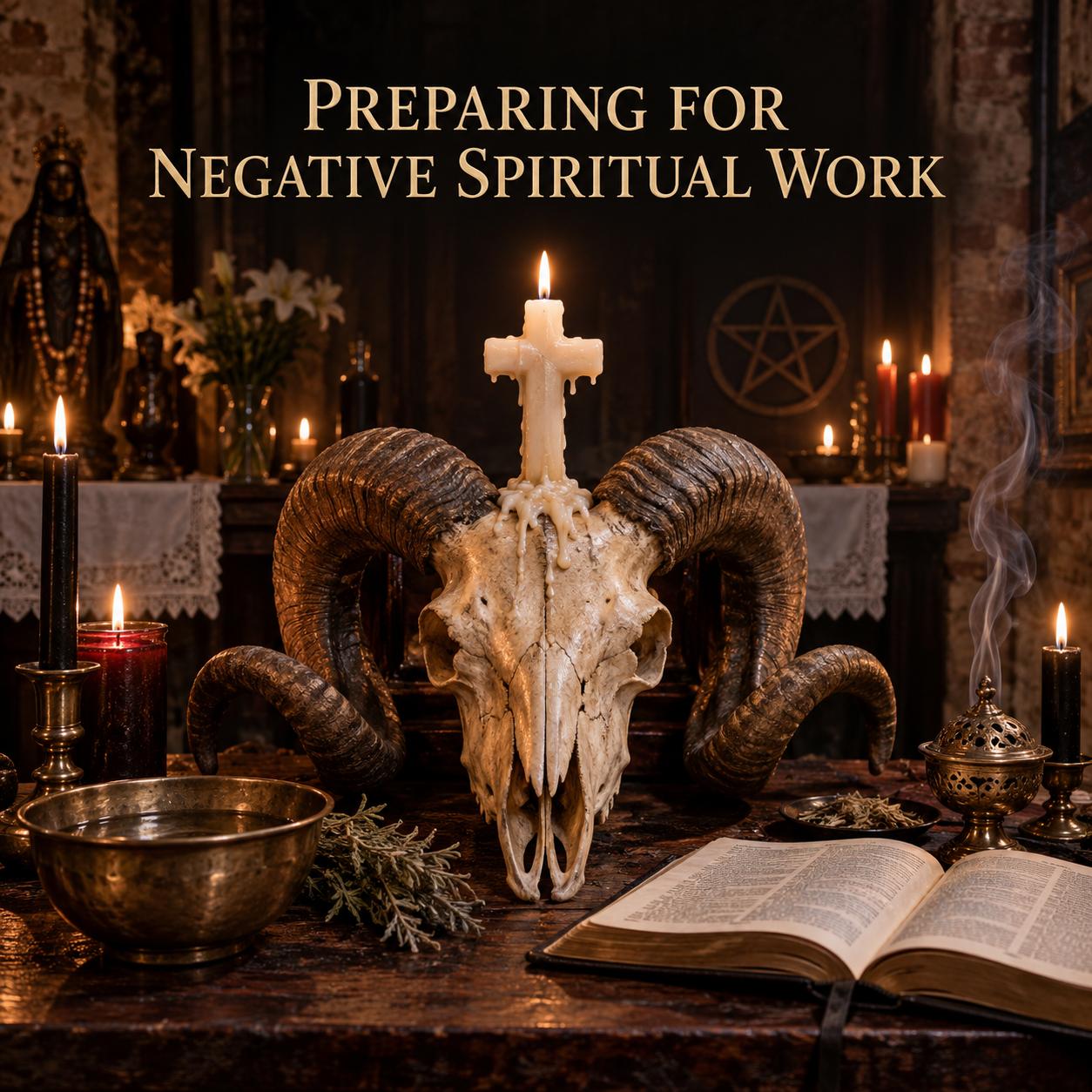
Every year, I dedicate a deliberate season to the practice and study of negative spiritual work. During this time, I consciously undergo a kind of spiritual metamorphosis intended to sharpen my knowledge of protection, justice, defense, and retribution. My decision to focus on negative work is not rooted in a desire to harm innocent people or create chaos. Quite the opposite. As a leader within my spiritual community, I believe I have a responsibility to understand how to defend myself and those who trust my guidance. Protection is not always gentle. Sometimes protection looks like a wall, and sometimes it looks like removing the person who keeps trying to climb over it.
Retribution, at least as I understand it, is not the same thing as uncontrolled revenge. It is not about lighting a candle every time someone irritates you. If that were the standard, some people would need to buy candles by the pallet. Retribution is a measured response to persistent harm. It is the spiritual acknowledgment that actions have consequences and that those who continually injure others cannot reasonably expect to move through life untouched by the results of their behavior. Even so, justified work still requires wisdom, restraint, and accountability.
During this season, I must come to terms with the reality of causing destruction. One of the most serious considerations is the effect that such work can have upon my mind, body, spirit, relationships, and community. In my many years of practice, I have learned that left hand work does not operate in isolation. It functions within a larger spiritual ecosystem governed by cause, consequence, relationship, and divine order. Every action enters that ecosystem and creates movement within it.
There is always a cost associated with baneful work. That cost should not always be understood as punishment. Sometimes it appears as spiritual fatigue, emotional heaviness, increased vigilance, strained discernment, or the simple burden of carrying destructive intent for an extended period. No practitioner is more powerful than divine law. Regardless of how skilled, initiated, or experienced we may become, none of us is exempt from consequence. The true art of working with the left hand is not pretending that no debt will arise. It is recognizing the possibility of that debt and preparing for it with maturity.
One of the methods I have developed for preparing myself is what I sometimes call paying in advance. By this, I do not mean that purification creates a license to behave recklessly. God is not operating a rewards program where nine days of prayer earns one free curse. What I mean is that I willingly accept discipline before I ask spiritual forces to carry out difficult or destructive work. I cleanse, pray, fast, reflect, and place myself under restriction before attempting to direct force toward another person or situation.
This preparatory period resembles the taboos placed upon initiates in many spiritual traditions. Taboos are serious restrictions maintained for a particular period, or sometimes indefinitely, to keep a person aligned with the obligations of a spiritual path. For an initiate, these restrictions may provide protection while the mind and spirit adjust to a new degree of power, responsibility, and awareness. In my own practice, the taboos are self established. They are not intended to make me afraid of my power. They are intended to prevent power from outrunning wisdom.
This method does not belong exclusively to any single spiritual system. I developed my own approach through experience, but I found that several historical grimoires offered useful structures for understanding prolonged purification. Two texts have been especially important to me. The first is a personal favorite, The Greater Key of Solomon. The second is The Sworn Book of Honorius. Although their operations and theological purposes differ, both texts teach that serious spiritual work should be preceded by serious spiritual preparation.
In The Greater Key of Solomon, a nine day period of preparation is prescribed for operations involving the magical circle. During these nine days, the master and disciples abstain from sensual pleasure and from what the text calls vain and foolish conversation. That restriction on speech is more important than it may initially appear. A person cannot spend the day gossiping, arguing, complaining, and feeding every passing frustration, then expect to enter the ritual chamber with a perfectly ordered mind. The mouth is part of the temple too.
After the sixth day, prayer and confession become more frequent. On the seventh day, the master bathes from head to foot in consecrated water and puts on clean white linen. The disciples undergo a similar washing while the master declares them regenerated, renewed, washed, and pure. The final three days include fasting, followed on the last day by another washing in running water and the recitation of penitential prayers.
The spiritual effect is explicitly initiatory. The operator is symbolically transformed from an ordinary person into a consecrated ritual subject. Confession addresses the conscience. Bathing marks renewal. White linen outwardly manifests the condition of purity being cultivated within. Fasting separates the practitioner from ordinary appetites and teaches the body that it is not in charge of the operation. The entire process establishes a clear boundary between everyday life and the sacred work that is about to begin.
I have found this nine day structure to be one of the most accessible and straightforward methods for organizing an effective period of cleansing. During the opening months of my yearly season of negative work, it has carried me safely through many of the difficulties associated with hexing, cursing, binding, and spiritual retribution. It establishes a strong foundation and reminds me that I must submit myself to discipline before attempting to exercise authority over anything else.
As the months continue, however, maintaining spiritual balance can become more difficult. Negative work has a way of narrowing the attention if it is not carefully managed. The practitioner may begin to remain in a defensive posture even when no immediate threat is present. That is not spiritual strength. That is exhaustion wearing ceremonial robes. When I recognize that the initial nine day preparation is no longer sufficient, I turn to a longer and more demanding structure found in The Sworn Book of Honorius.
The Sworn Book of Honorius contains a principal preparatory sequence lasting twenty days. Its central operation is directed toward the vision of God and communication with celestial spirits, but its teachings concerning purification are valuable far beyond that specific operation. The operator is instructed to become penitent, confess wrongdoing, avoid sexual temptation, withdraw from morally corrupt company, wear clean clothing, and maintain both bodily cleanliness and what the text calls cleanness of soul.
For twenty days, the operator is expected to pray continually, avoid sin, and remain attentive to personal conduct. The text encourages continuous fasting where possible. When that cannot be maintained, it still requires at least seven consecutive days of fasting. The purpose is not simply to make a spirit appear. The preparation is intended to elevate and stabilize the soul so that the operator can encounter divine or angelic power without becoming overwhelmed, deceived, or spiritually injured.
The text explains that angels are clean and therefore desire cleanliness in those who approach them. In its medieval Christian worldview, cleanliness is simultaneously physical, moral, devotional, and spiritual. The clean body reflects the disciplined mind. The disciplined mind supports the prayerful soul. The prayerful soul becomes better prepared to stand near spiritual powers without losing its sense of order. The practitioner attempts, however briefly and imperfectly, to resemble the celestial beings being approached.
To align oneself with the spirit behind negative work requires a genuine metamorphosis. The practitioner will eventually come face to face with personal fears, doubts, traumas, guilt, anger, pride, and insecurity. Moral assumptions will be questioned. Definitions of right and wrong will be tested. The practitioner must decide whether the work is truly an act of protection and justice or merely wounded pride dressed up in impressive spiritual language. That examination is uncomfortable, but it is necessary. If negative work never challenges the person performing it, that person probably is not examining the work deeply enough.
In my own yearly practice, I have experienced the difference that these periods of purification make. There have been seasons when the nine day discipline of The Greater Key of Solomon carried me confidently through the beginning of the work. As the season progressed, however, I could feel that maintaining balance required more from me. The longer structure of The Sworn Book of Honorius gave me space to slow down, examine my motives, restore my devotional practices, and remember that I am more than the force I am directing. Sometimes the most powerful thing a practitioner can do is wash, pray, sit down, and become quiet before deciding that another candle needs to be lit.
The similarities between these grimoires are more significant than their differences. Both unite inward purification with outward cleanliness. Both connect prayer with bodily discipline. Both restrict speech, appetite, sexual activity, and worldly distraction. Both assume that contact with spiritual forces places pressure upon the practitioner. Most importantly, both teach that authority must be preceded by submission. Before the magician commands spirits, the magician must first command the self.
I encourage you to develop your own process of cleansing and purification before any season of negative work. The following are several other texts, including the ones previously listed that I hope you will be able to draw inspiration from.
|
Text |
Period |
Principal observances |
Claimed effect on the practitioner |
|
Greater Key of Solomon |
Nine days |
Continence, restricted speech, confession, bathing, white linen, final three-day fast |
Regeneration, purification, protection and ritual fitness |
|
Lesser Key of Solomon: Goetia |
One month for making the Secret Seal |
Sexual abstinence, fasting, prayers for forgiveness; washing and vesting before evocation |
Inward and outward purity; spiritual “armor” |
|
Heptameron |
Nine days, intensified during final three |
Confession, Communion, holy water, fasting, chastity, abstinence from luxury |
Sacramental purity and angelic protection |
|
Sworn Book of Honorius |
Twenty days, with at least seven consecutive fasting days |
Continual prayer, confession, chastity, avoidance of sin and corrupt company |
Purification of the soul for divine and angelic vision |
|
Abramelin |
Six months or eighteen months, depending on manuscript |
Prayer, confession, bathing, clean surroundings, temperance, increasing seclusion and chastity |
Knowledge and Conversation of the Holy Guardian Angel |
|
Hekhalot Rabbati: Sar Torah |
Twelve days |
Immersion, clean garments, seclusion, restricted food, sustained recitation |
A “clean spirit,” illuminated understanding and extraordinary memory |
|
Sefer HaHekhalot and Maaseh Merkavah |
Forty days; also an annual thirty- or forty-day cycle |
Fasting, repeated immersion, sexual continence, seclusion and divine-name recitation |
Safe approach to angelic presence and sacred names |
|
Ars Notoria |
A lunar or month-structured discipline |
Contrition, fasting, chastity, scheduled prayers and examination of figures |
Purification of conscience, memory, understanding and eloquence |
That principle has become essential to my understanding of negative work. Cleansing before the work prepares me to act. Cleansing during the work protects my judgment. Cleansing after the work helps me return to myself. Without that cycle, a practitioner can become consumed by the very forces they believe they are controlling. Negative work should never make us permanently negative people. If the work destroys our health, wisdom, compassion, humor, or ability to live peacefully within our community, then we are no longer mastering the work. The work is mastering us.
For me, purification is not optional. It is one of the practices that has allowed me to remain spiritually healthy, mentally clear, and accountable after many years of working with both hands. It allows me to defend myself and my community without building a permanent home inside anger. A wise practitioner must know how to open the door to destructive power when justice requires it, but an even wiser practitioner must know how to close that door, cleanse the room, wash their hands, and return to the living world whole.